


It’s easy to assume that if nothing hurts, everything must be fine. Many people are surprised to learn that tooth decay often starts quietly, with no obvious warning signs. By the time pain shows up, the problem may already be more advanced than expected. That’s why cavity treatment is often recommended before discomfort begins. Knowing what to watch for can help you protect your smile and avoid more complex dental concerns later.
Why Cavities Can Develop Without Pain
Tooth enamel does not have nerves, which means early decay may not cause discomfort right away. A cavity can grow slowly and remain unnoticed until it reaches the deeper layers of the tooth. This is one reason regular dental visits matter. Dentists can detect changes that are easy to miss at home, even for patients with strong brushing habits.
A Change in Tooth Sensitivity
One of the earliest signs of a cavity can be mild sensitivity. You might notice a quick twinge when drinking something cold, eating something sweet, or breathing in cool air. It may come and go, which makes it easy to ignore. Sensitivity doesn’t always mean decay, but it can be a reason to schedule an exam, especially if it happens repeatedly in the same area.
A Rough or Uneven Spot on a Tooth
Cavities can affect the surface texture of a tooth. Some patients notice a rough edge when they run their tongue along a certain spot. Others feel that food tends to get stuck in one area more often than it used to. Even small changes like this can signal early enamel damage.
A Dark Spot That Doesn’t Brush Off
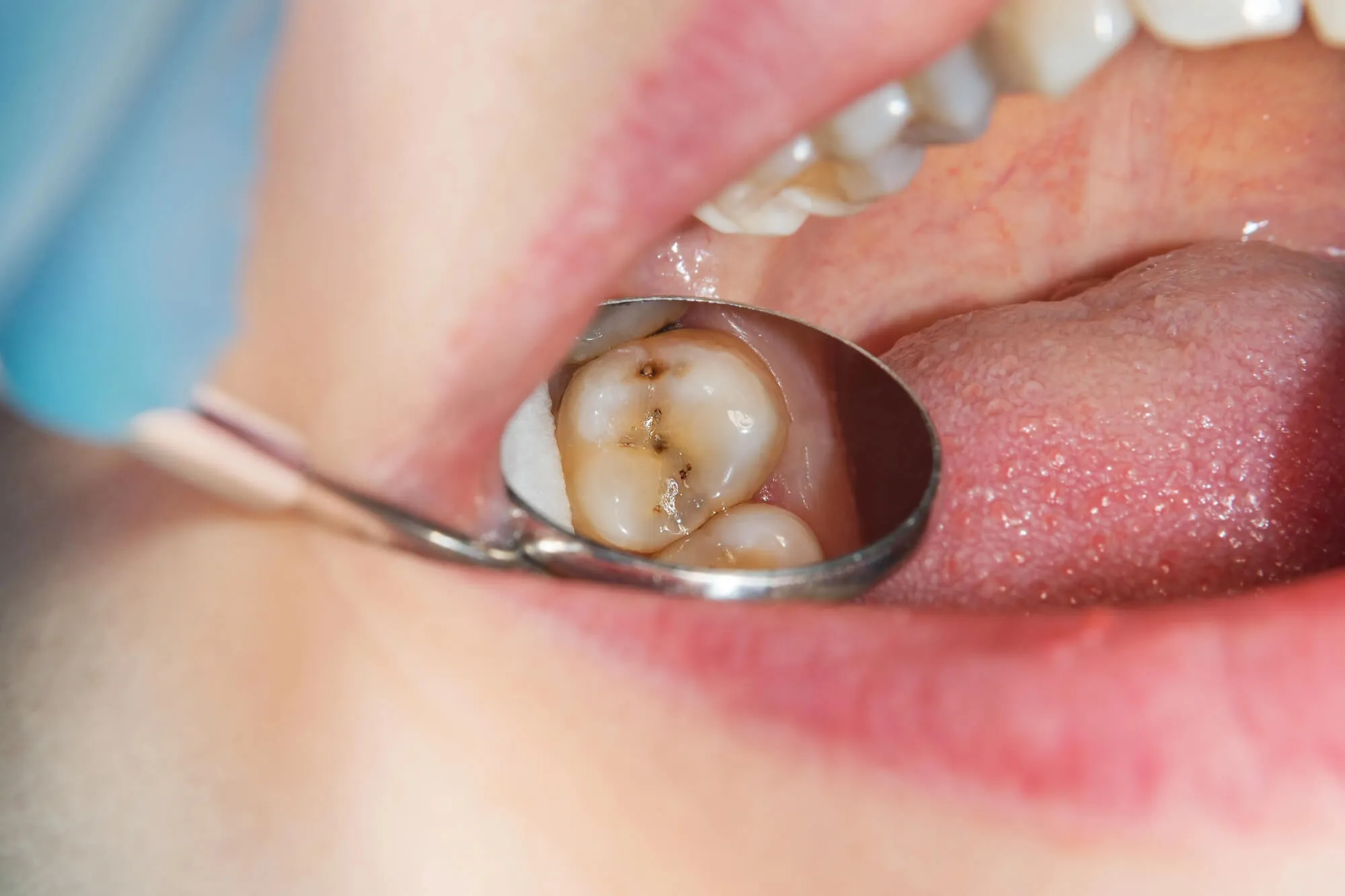
Not every stain is a cavity, but discoloration should never be dismissed without a closer look. A cavity may appear as a small brown, grey, or black spot that remains even after brushing. Sometimes the area looks dull or cloudy rather than dark. Since tooth decay can start in tiny grooves, it may be difficult to tell what you’re seeing without a professional exam.
Food Getting Stuck in the Same Place
If food repeatedly gets trapped between the same teeth, it may indicate a change in tooth shape or surface structure. Cavities can form along the sides of teeth where floss is meant to clean, and those areas can be difficult to see. This is common in molars and between teeth where brushing alone may not reach.
Changes Around an Older Filling
Cavities can develop around existing restorations, especially if their edges wear over time. You might notice new sensitivity, a rough edge, or a change in how your bite feels. This doesn’t always mean a cavity, but it can signal that the area needs attention. Regular checkups help monitor older dental work and catch concerns early.
What Happens During a Cavity Evaluation
If your dentist suspects decay, they will examine the tooth closely and may recommend X-rays. This helps identify decay between teeth or beneath the surface. If cavity treatment is needed, the dentist will explain what’s happening and discuss the next steps in a clear, calm way.
In many cases, early cavities can be managed with a simple tooth-colored filling. If decay is more advanced, a crown may be recommended to support the tooth. The right option depends on how much structure is affected and what will help the tooth function comfortably.

Schedule a Visit for Cavity Treatment Today
At Dentistry at Kennestone, the focus is on helping patients feel comfortable, supported, and fully heard. Dr. Foxhall and the team take time to listen, explain what’s happening in plain language, and recommend care that supports long-term oral health. If you’ve noticed changes in your teeth—even without pain—schedule an appointment today so you can get clear answers and feel confident about your next step.